Vascular Laser in
St. George, Utah.
Vascular laser treatment uses targeted laser energy to permanently eliminate spider veins, broken capillaries, rosacea redness, and vascular lesions — clearing the skin of visible vessels without surgery, needles, or significant downtime.
No Surgery
Visible Improvement
Award Winner 2021–2026
Experience
What is vascular laser treatment?
Vascular conditions are among the most frequently treated cosmetic concerns. Vascular laser uses precisely calibrated wavelengths of laser energy that are selectively absorbed by hemoglobin — the pigment in red blood cells — to target and destroy unwanted blood vessels beneath the skin without damaging the surrounding tissue. The treated vessel collapses and is naturally reabsorbed by the body over the following weeks, clearing the skin's surface of visible redness, veins, or lesions.
- Treats spider veins, broken capillaries, rosacea, and vascular lesions
- Selective photothermolysis — targets hemoglobin without affecting surrounding skin
- Non-invasive, no needles, no surgical incisions
- Minimal downtime — return to normal activity the same day
- Results visible within two to four weeks as treated vessels clear
- Performed by Shannon Evans, RN, BSN, or a licensed and trained team member
Selective photothermolysis —
targeting hemoglobin.
"Vascular conditions are among the most frequently treated cosmetic concerns — and vascular laser is one of the most effective non-surgical tools for clearing them permanently."
The vascular laser emits light at a wavelength specifically tuned to be absorbed by oxyhemoglobin — the pigment in blood — while passing harmlessly through the surrounding skin. When the laser pulse reaches the targeted vessel, the absorbed energy converts to heat, damaging the vessel wall and causing it to collapse. The body's natural immune response then clears the destroyed vessel tissue over two to four weeks, progressively reducing the visibility of the treated vein or lesion. The surrounding skin is unaffected because the laser energy is selectively absorbed by the blood vessel's pigment rather than the skin.
non-invasive procedure
conditions treated
vessels to clear
normal activity
Conditions vascular laser addresses.
Spider Veins
Small, superficial veins visible beneath the skin surface on the face, nose, and cheeks. Vascular laser targets and collapses these vessels, clearing the skin over the following weeks as the body reabsorbs the treated tissue.
Rosacea & Redness
Persistent facial redness and flushing caused by dilated surface vessels. Vascular laser addresses the underlying vascular architecture responsible for chronic redness, progressively reducing the background redness and the intensity of flares over a series of treatments.
Broken Capillaries
Fine red lines visible around the nose, cheeks, and chin — commonly the result of sun exposure, temperature changes, or skin sensitivity. Vascular laser collapses and clears these superficial capillaries with minimal risk to the surrounding skin.
Cherry Angiomas
Small, bright-red benign skin growths made up of clustered blood vessels. Cherry angiomas respond well to vascular laser — typically clearing in one to two sessions. They are one of the most straightforward vascular conditions to treat.
Facial Telangiectasia
Permanently dilated small blood vessels near the skin surface — a common feature of aging skin, sun damage, and rosacea. Vascular laser selectively targets the dilated vessels and eliminates them without the downtime or risk of surgical alternatives.
Vascular Lesions
Port wine stains, hemangiomas, and other vascular skin lesions are among the most challenging cosmetic concerns to treat — and vascular laser is the gold-standard non-surgical option. Results vary by lesion type and depth, and our team will give you realistic expectations at your consultation.
Before & after.
Real results from vascular laser treatments at Desert Sands Aesthetics & Laser. Individual outcomes vary based on the condition treated, skin type, and number of sessions completed.
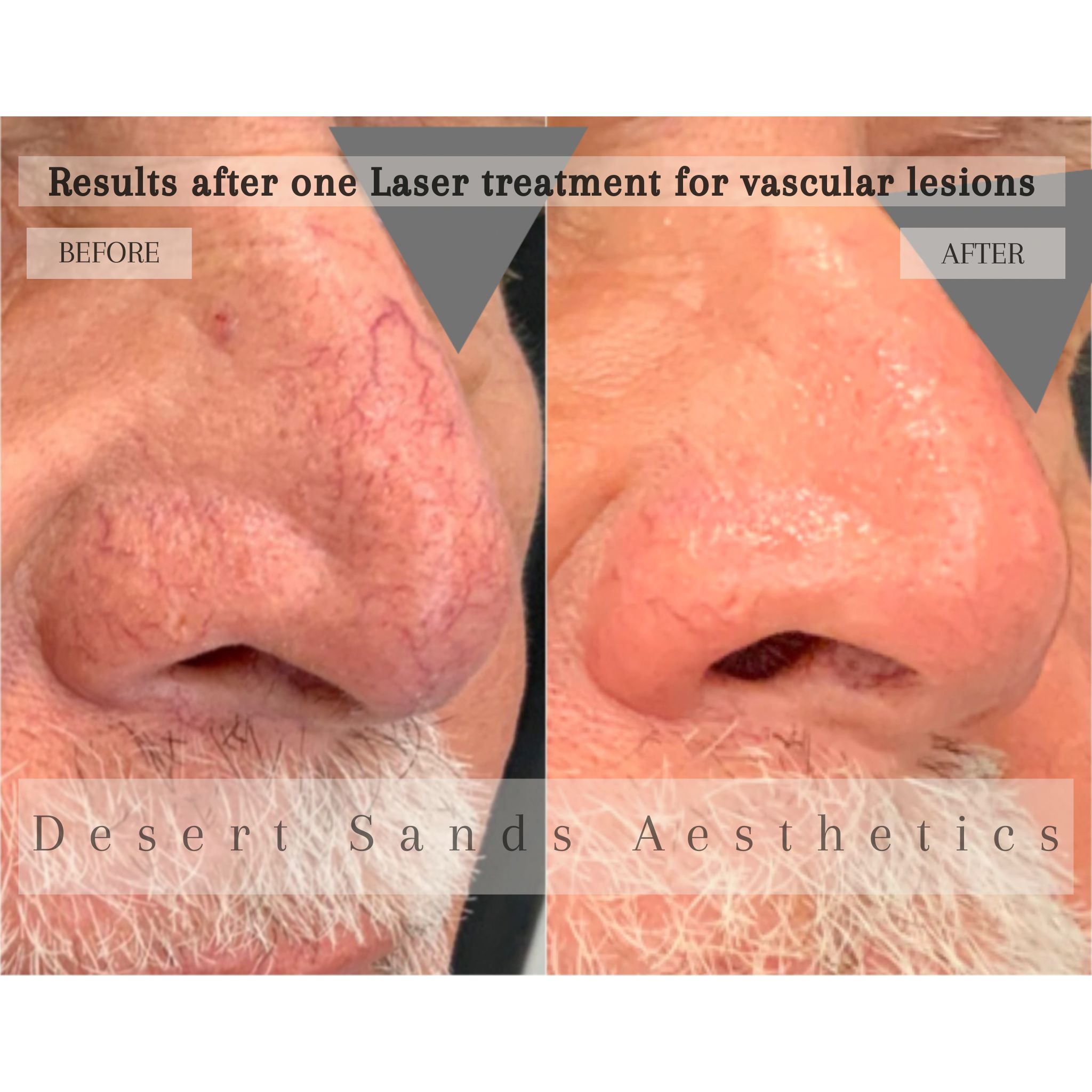
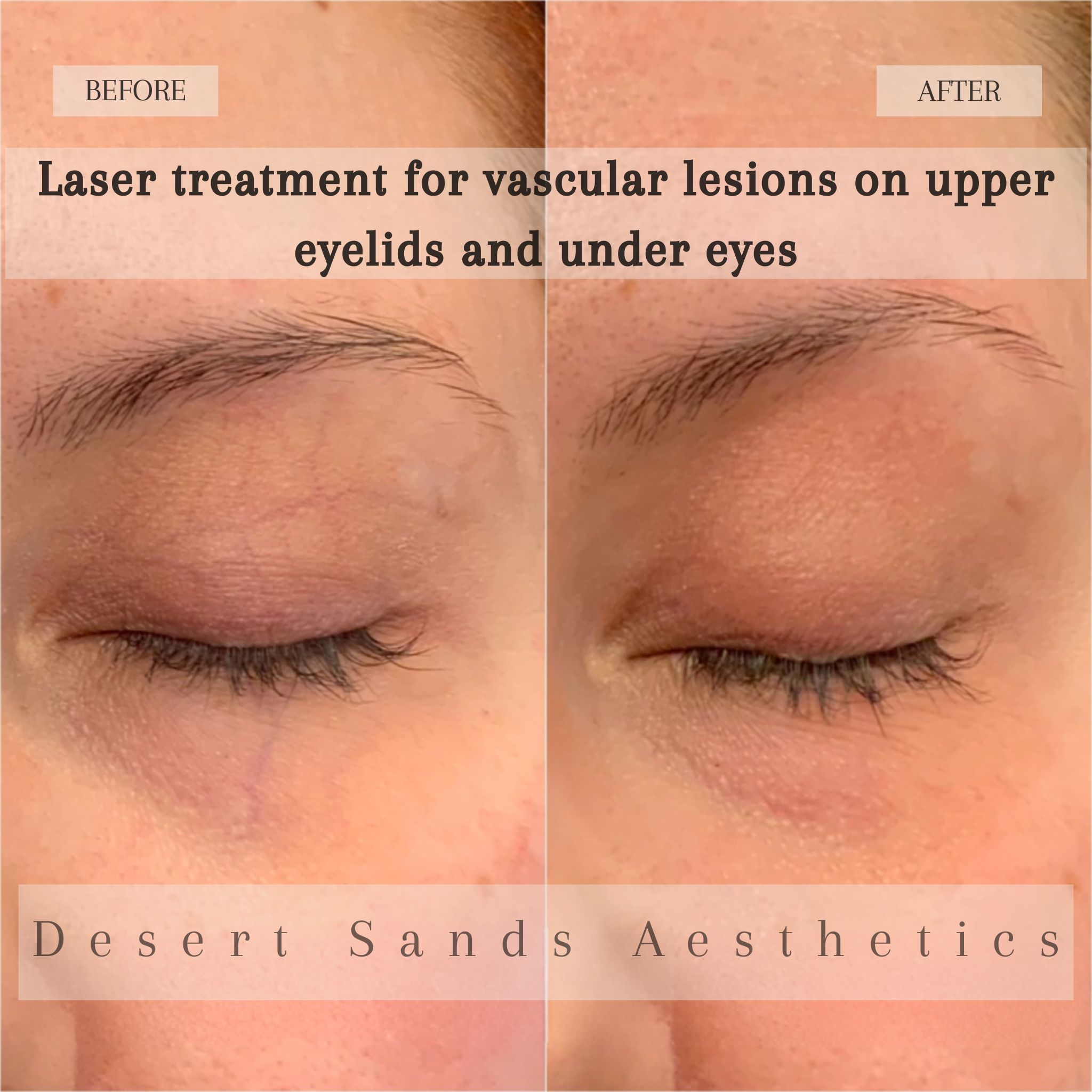
Results shown are from actual patients treated at Desert Sands Aesthetics & Laser. Photos have not been digitally altered. Individual results vary depending on skin type, condition treated, and number of sessions completed.
Who is a good candidate?
Vascular laser is appropriate for patients with visible vascular conditions on the face or body. Common presentations we treat include:
- Spider veins on the face, nose, or cheeks
- Rosacea or persistent, chronic facial redness
- Broken capillaries around the nose and chin
- Cherry angiomas or other small vascular lesions
- Telangiectasia from sun damage, aging, or skin sensitivity
- Port wine stains or hemangiomas being managed over time
Vascular laser works best on lighter skin tones where the contrast between the target hemoglobin and the surrounding skin pigment is greatest. An active tan in the treatment area can increase the risk of adverse pigmentation changes — sun avoidance before treatment is essential.
Vascular laser and IPL photofacial address overlapping concerns from different angles. IPL's broad-spectrum approach treats both pigmentation and vascular redness in the same session — while dedicated vascular laser provides more targeted, single-wavelength energy for discrete vessels and lesions. Our team will recommend the most appropriate approach at your consultation based on your specific presentation.
Treatment, timeline, & results.
15–30 Minutes
Vascular laser sessions are fast. Most facial treatments take 15 to 30 minutes. The laser handpiece is passed over the treatment area, delivering precise pulses. A mild snapping sensation is typical. Protective eyewear is worn throughout.
Light Snapping
Most patients describe vascular laser as a light rubber band snap with a flash of warmth at each pulse. The treatment is well tolerated by most without numbing. For sensitive areas, topical anesthetic is available.
Minimal
Treated areas may appear temporarily darker or more red immediately after treatment as the vessel darkens before clearing. Mild swelling or redness resolves within hours to days. Most patients return to normal activity the same day with mineral sunscreen applied.
2–4 Weeks
Treated vessels darken in the days immediately following treatment before progressively clearing over two to four weeks. Rosacea and diffuse redness improve gradually over a series of sessions. Most patients see significant improvement in one to three treatments.
Common questions.
What is vascular laser treatment?
How many treatments will I need?
Is there downtime after vascular laser?
What is the difference between vascular laser and IPL?
Explore more laser treatments.
IPL Photofacial
Broad-spectrum light for sun damage, pigmentation, and vascular redness. Addresses overlapping concerns in the same treatment session.
View ServiceLaser Skin Resurfacing
CO2RE and Ellipse Frax for overall texture, tone, and anti-aging results as a complement to vascular clearing.
View ServiceLaser Hair Removal
Gentle Max Pro permanent hair reduction for the face and body — a natural companion to vascular treatments.
View ServiceChemical Peels
PCA SKIN professional peels to complement vascular clearing with surface pigmentation correction and skin renewal.
View ServiceOur St. George Clinic
965 E 700 S, Suite 201 · St. George, UT 84790 · Monday–Friday 9 AM–5 PM
Get DirectionsAll Laser Services
Explore the complete range of laser treatments at Desert Sands Aesthetics & Laser.
View AllReady to begin?
Every new patient starts with a consultation. We will assess your vascular concerns, recommend the right laser approach, and give you realistic expectations — with no obligation to proceed.