
Chemical Peels
& Dermaplaning.
Medical-grade skin resurfacing for sun damage, uneven tone, acne scarring, and the kind of texture that Southern Utah's desert climate creates over time. Performed by Tiffany Anderson, LME, at Desert Sands.
Esthetician On-Site
Award Winner 2020–2025
Director On-Site
Every Peel Is Custom
Resurface. Renew.
Reveal.
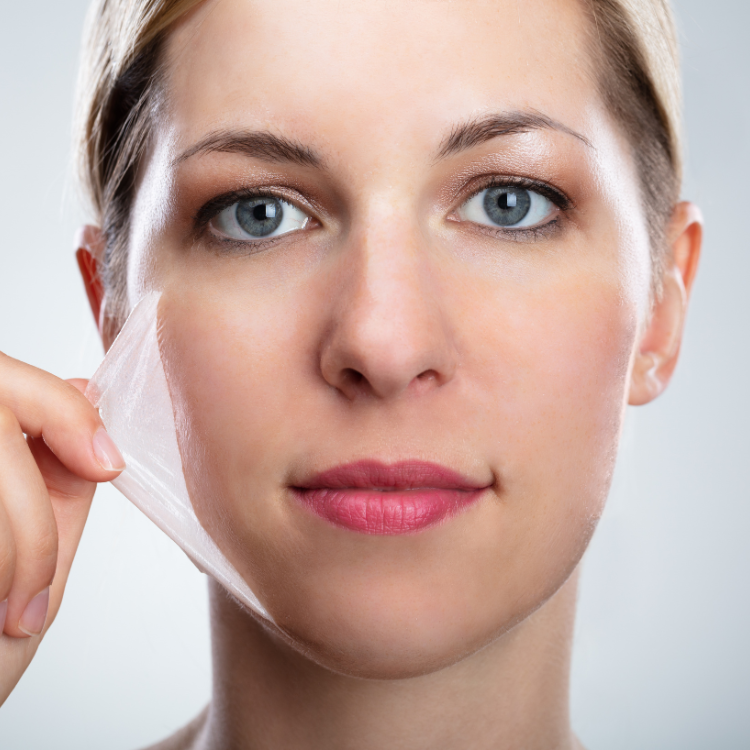
A chemical peel uses a carefully formulated acid solution to exfoliate the outermost layers of the skin — triggering the body's natural renewal process. As the treated skin sheds, fresher, smoother cells emerge with improved tone, texture, and clarity.
In Southern Utah, chemical peels address concerns that our environment creates in abundance: decades of high-altitude UV exposure, sun damage, pigmentation, and the chronic dehydration that accelerates surface aging. A properly selected peel works at the source of these problems — not just the surface.
At Desert Sands, no two peels are the same. Tiffany Anderson assesses your Fitzpatrick skin type, your specific concerns, and your tolerance before recommending the right formulation and strength. Every treatment is monitored throughout and every patient receives detailed aftercare guidance to ensure optimal healing and results.
- Medical-grade formulations not available over-the-counter
- Custom peel selection based on your skin type and concern
- Performed by a licensed master esthetician with advanced training
- Detailed aftercare protocol for every patient
"The goal is always to go deep enough to achieve a real result — and never deeper than your skin needs."
— Tiffany Anderson, LME
Six concerns a peel addresses.
Chemical peels are one of the most versatile skin treatments available — effective for a wide range of concerns across nearly all skin types when properly selected and applied.
Sun Damage
Years of Southern Utah's high-altitude UV exposure leave their mark as mottled pigmentation, rough texture, and premature aging. Peels accelerate the removal of sun-damaged surface cells and stimulate the collagen that UV breaks down over time.
Hyperpigmentation
Melasma, post-inflammatory hyperpigmentation, and age spots respond well to the right peel formulation. Certain acids — particularly kojic acid, mandelic acid, and lactic acid — specifically target excess melanin at the cellular level.
Acne & Breakouts
Salicylic acid and glycolic acid peels reduce active breakouts by exfoliating debris from within pores, decreasing oil production, and creating an environment where acne-causing bacteria cannot easily thrive.
Acne Scarring
Repeated chemical exfoliation stimulates collagen remodeling in the dermis — gradually improving the texture and depth of post-acne scarring. A series of peels combined with microneedling delivers compounded results.
Fine Lines & Texture
Medium-depth peels reach the upper dermis where collagen lives, triggering a renewal response that tightens and smooths the skin's surface over the weeks following treatment. Results improve with each session in a series.
Dull, Uneven Tone
Removing the buildup of dead, damaged surface cells immediately reveals brighter, more even skin beneath. Regular maintenance peels prevent the accumulation that causes skin to look tired and flat between seasons.
The right peel for your skin.
Not all chemical peels are the same. Strength, formulation, and depth are matched to your specific concern, skin type, and tolerance. Tiffany will recommend the appropriate approach at your consultation.
Light Peel
Works on the outermost layer of skin (epidermis). Ideal for general skin maintenance, mild discoloration, surface texture, and patients new to chemical peels. Minimal to no visible peeling.
Appropriate for all skin types including darker complexions. Often done in a series of 4–6 treatments spaced 3–4 weeks apart.
Medium Peel
Penetrates to the upper dermis for more significant correction of sun damage, moderate hyperpigmentation, early acne scarring, and fine lines. Visible peeling typically occurs over 5–7 days.
Produces more dramatic results per session. Suitable for a range of skin types with proper pre-peel preparation and aftercare.
Combination Peel
Formulations combining multiple acids address complex or stubborn skin concerns — including melasma, deep textural irregularities, and longstanding sun damage. Each protocol is designed specifically for your skin.
Often paired with a preparation phase using prescription-grade topicals to reduce downtime risk and optimize results.
Pricing varies by peel type and formulation. Call (435) 522-5828 or book a consultation for a personalized recommendation and pricing.
Dermaplaning — velvety smooth skin.
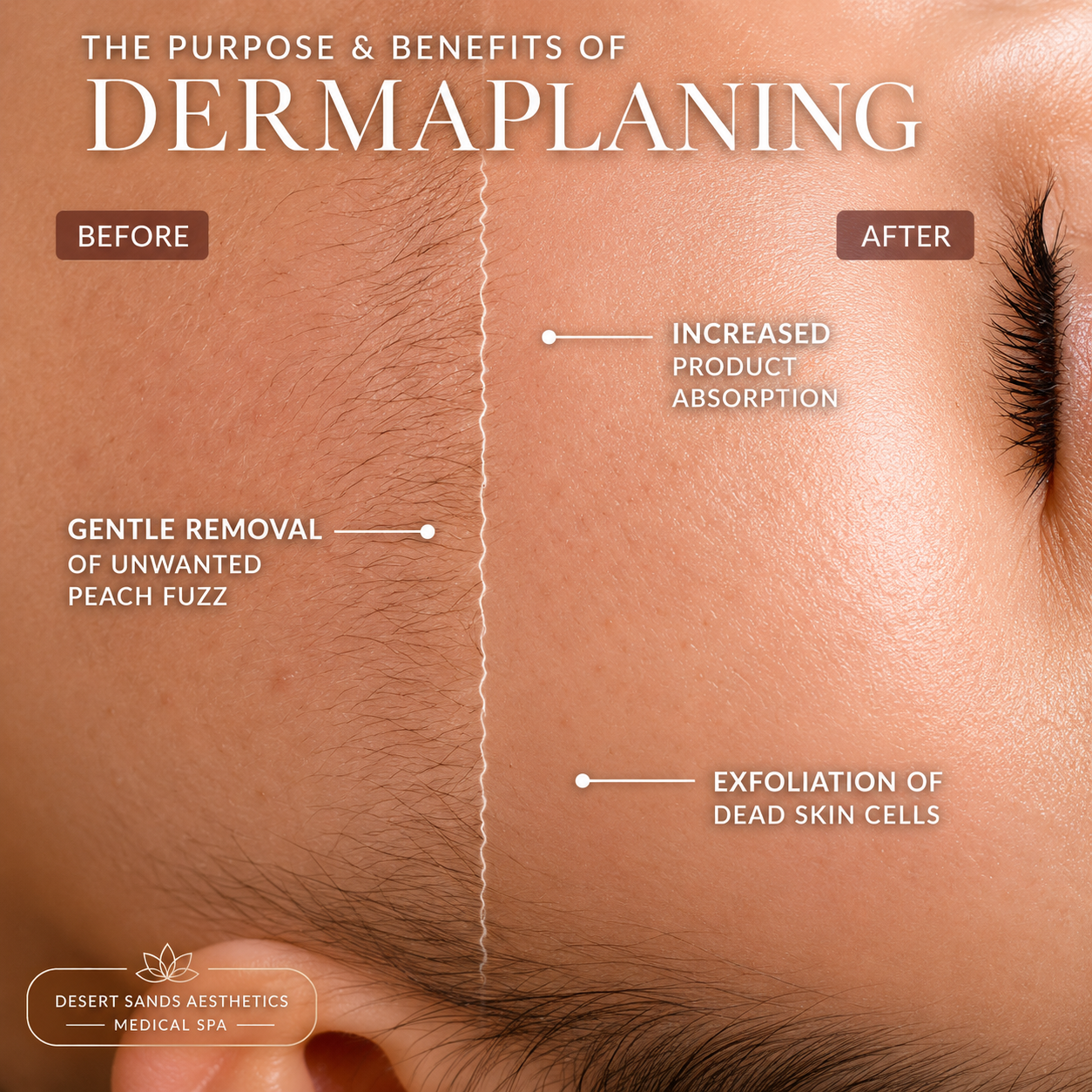
Dermaplaning is a precision manual exfoliation treatment using a sterile surgical scalpel to gently remove the outermost layer of dead skin cells and fine vellus hair (peach fuzz) from the face. The result is immediately visible: smoother, brighter skin with improved texture and a surface that allows skincare products and treatments to penetrate far more effectively.
At Desert Sands, dermaplaning is performed by Tiffany Anderson, LME, using professional-grade technique. It is a particularly powerful complement to chemical peels — prepping the skin's surface for deeper acid penetration and compounding the results of both treatments when done in sequence.
- Immediately removes built-up dead skin cells and peach fuzz
- Creates ultra-smooth, even skin surface with no downtime
- Dramatically enhances penetration of serums and active ingredients
- Improves makeup application and finish
- Appropriate for most skin types — safe during pregnancy
- Results in 1–2 days post-treatment · no social downtime
Dermaplaning pairs exceptionally well with a light chemical peel — ask Tiffany about the Dermaplaning + Peel combination at your consultation.
Your peel experience.
A chemical peel at Desert Sands is a deliberate, carefully supervised process — not a quick retail treatment. Here is what happens from start to finish.
Consultation
Tiffany assesses your skin type, Fitzpatrick score, and specific concerns. She selects the peel formulation and discusses what to expect — including downtime, aftercare, and how many treatments you may need. No pressure, no guesswork.
Preparation
Your skin is thoroughly cleansed and any oils or makeup are removed. For medium-depth peels, a pre-peel solution may be applied to ensure even penetration across all areas of the face.
Treatment
The peel solution is applied and left on for a controlled period. You may feel mild tingling or warmth — normal sensations that indicate the acids are working. Tiffany monitors your skin's response throughout and neutralizes the solution at the right moment.
Aftercare
You leave with a detailed aftercare kit and written instructions. Peeling typically begins 2–3 days post-treatment. Avoid sun exposure, picking, and active ingredients until fully healed. Tiffany is reachable with any questions during your recovery.
Meet Tiffany Anderson, LME.
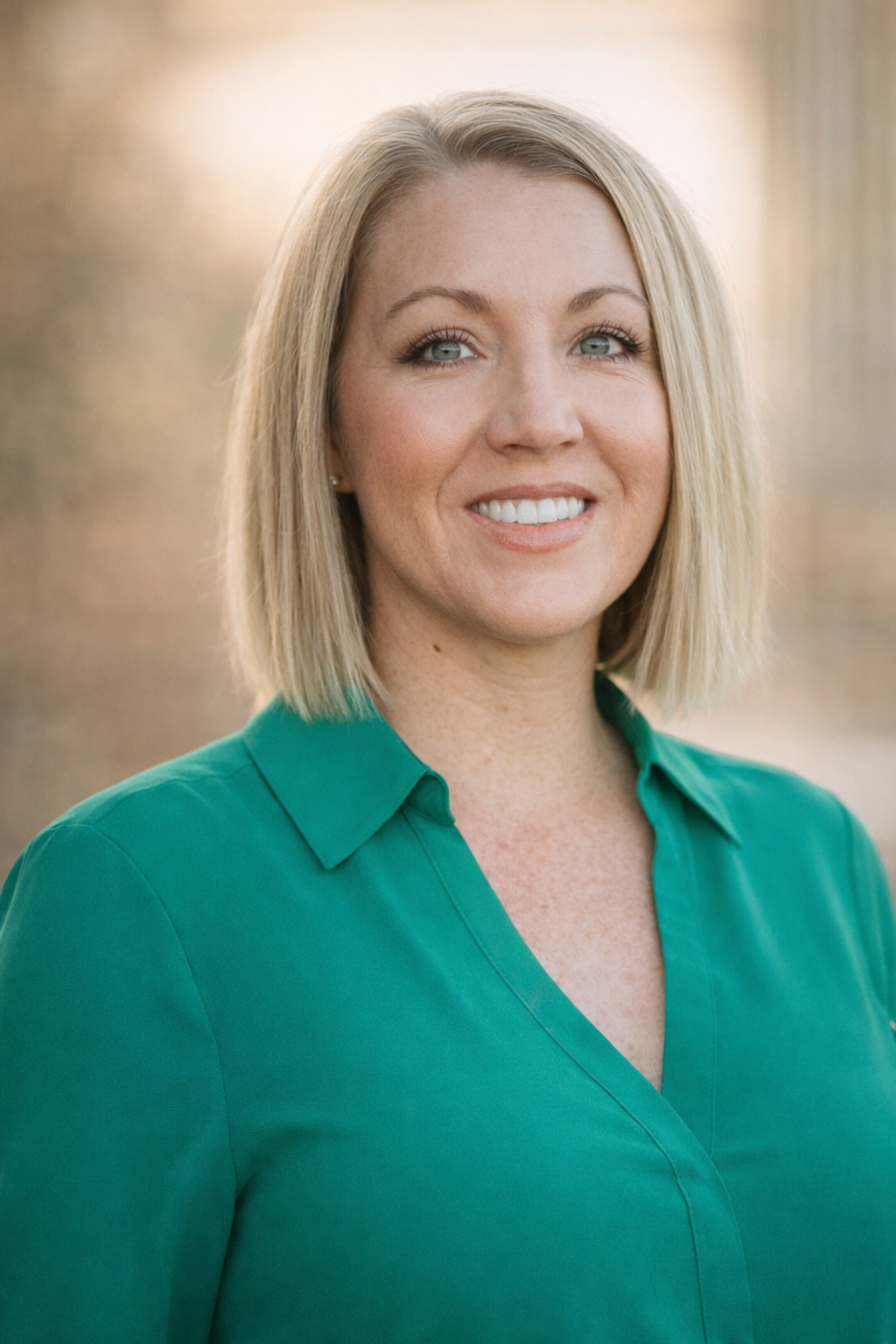
Tiffany Anderson is a licensed master esthetician with advanced training in chemical peels, dermaplaning, Dermasound, laser treatments, and microneedling. She leads the skincare program at Desert Sands and approaches every peel with precision and care — understanding that the right peel at the right depth delivers extraordinary results, while the wrong selection causes unnecessary discomfort and risk.
Tiffany takes the time to explain what she is recommending and why. She wants every patient to understand their skin — not just receive a treatment — and leaves each appointment with the knowledge to care for their results at home. Her approach is thorough, warm, and genuinely invested in your outcomes.
- Licensed master esthetician — comprehensive skin science training
- Advanced peel and dermaplaning certification
- Same provider every appointment — continuity of care
Common questions.
What is a medical-grade chemical peel?
How many treatments will I need?
What is the downtime for a chemical peel?
Are chemical peels safe for darker skin tones?
Can I combine a chemical peel with other treatments?
What is dermaplaning and how is it different from a peel?
Explore more skincare.
Microneedling
Collagen-induction therapy for scars, texture, and skin renewal. Combines powerfully with a series of chemical peels.
View ServiceFacials & Dermasound
Ultrasonic and manual facial treatments for maintenance, hydration, and general skin health between peel sessions.
View ServiceIPL Photofacial
Intense pulsed light for sun damage and brown spots — extends peel results by addressing pigmentation at a deeper level.
View ServiceLaser Skin Resurfacing
CO2RE Fractional and Frax 1550 for deeper resurfacing when a chemical peel alone won't achieve the desired result.
View ServiceSkin Renewal — PRX & AquaGold
Desert Sands' signature biorevitalization treatment. Zero downtime collagen stimulation that pairs naturally with peels for year-round results.
View ServiceMeet Tiffany Anderson
Licensed master esthetician and laser specialist. Learn more about Tiffany's training, certifications, and approach to skincare.
View ProfileReady to resurface?
Your care starts with a personal conversation with Tiffany. She will assess your skin, explain exactly which peel is right for you, and give you a clear picture of what to expect — with no obligation to proceed on the day.